
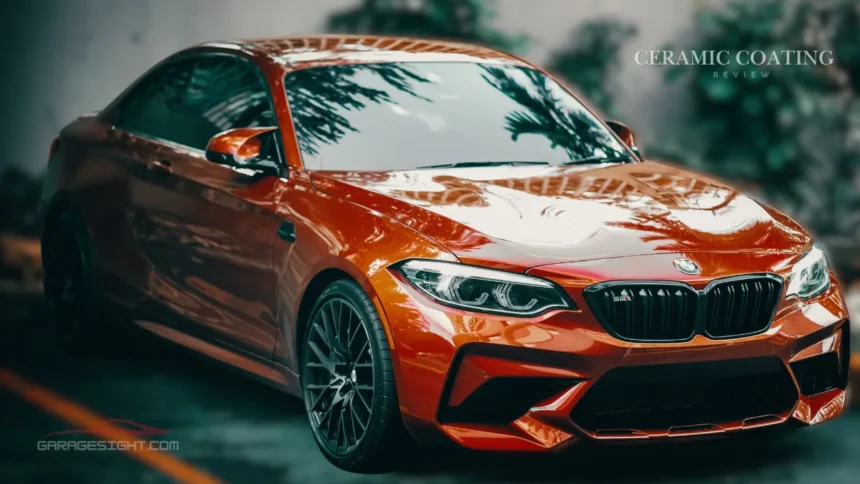
Ceramic coating has become one of the most talked-about upgrades in the car care world, and for very good reason. It delivers long-lasting paint protection that no wax or sealant can realistically come close to matching in terms of genuine durability.
What Is Ceramic Coating and How Does It Work?
At its core, ceramic coating is an SiO2-based formula suspended in an organic solvent. Once applied, nanoparticles cross-link into every microscopic valley of your factory clear coat, forming a hard, extremely durable, and glass-like protective layer.
This barrier raises surface tension and stops all contaminants from bonding to the paint surface at all. Silicon Carbide formulas go a step further, forming a true covalent bond with the polyurethane beneath rather than simply sitting on top of the existing clear coat.
The newest category blends SiO2 with Reduced Graphene Oxide, a carbon lattice just one atom thick. It improves thermal conductivity, reduces static charge, and adds real tensile strength that pure quartz ceramic formulas simply cannot deliver on their own.
Ceramic vs Graphene
Standard SiO2 coatings deliver 9H surface hardness, last 3 to 5 years, and push water contact angles to around 110 degrees of repellency. Graphene hybrids hit 10H, last 5 to 9 years on warranted products, and reach 115 to 120 degrees of water repellency.
Graphene actively dissipates heat across body panels instead of letting it pool under individual water droplets. The result is far fewer baked-in mineral spots on a ceramic coat on cars treated with rGO blends after prolonged sun exposure on horizontal panels.
Chemical resistance widens from pH 2 to 12 on standard coatings up to pH 1 to 14 on graphene blends. That broader pH range makes a genuine difference when dealing with bird droppings, acid rain, tree sap, and harsh industrial fallout on the paint surface.
What Is The Actual Means Of 9H?
The 9H rating comes from ASTM D3363, where pencils are dragged across the coated surface at a 45 degree angle under 7.5N of applied force until a scratch finally appears. This is a standardised pencil hardness test and has nothing at all to do with the Mohs scale.
On the Mohs hardness scale, diamond sits at 10 and ordinary glass sits at 5.5. A genuine 9H pencil only measures 4 to 5 on Mohs, making it actually softer than bare glass itself. Most standard factory clear coats rate just 2 to 3 on that very same scale.
In practice this means a meaningful reduction in wash swirls, towel marring, and light daily scratches from regular handling. It will not stop a rock chip at motorway speed or a deliberate key scratch, and no coating product on earth can honestly make that claim
Ceramic Coating Cost and Budget Options
Dealership add-ons like GardX or Supagard typically run between 499 and 699 pounds, but are usually applied straight over transit grime with zero paint correction, meaning all existing swirl marks simply get permanently sealed underneath the coating product.
A proper professional ceramic coating car job from Gtechniq, CarPro, or Ceramic Pro costs 400 to 1,000 pounds, covering 15 to 30 hours of genuine work in a climate-controlled studio with full decontamination and machine paint correction always included.
Budget options from local garages at 200 to 300 pounds often use spray sealant rather than true ceramic, with no decontamination and no correction at all. They rarely last beyond a few months and deliver very little meaningful or lasting paint protection.
Why Prep Matters More Than the Product?
Proper auto ceramic coating starts with an iron fallout remover to dissolve brake dust, then a tar remover to strip road oils from the paint surface. A clay bar stage then lifts any remaining organic contamination from the factory clear coat completely.
Machine compounding and polishing eliminate 85 to 95 percent of swirl marks before anything goes near the paint. Trim, rubber seals, and carbon fibre areas should always be masked carefully with quality detailing tape to prevent any accidental coating haze.
A final wipe with isopropyl alcohol removes all polishing oils so the coating bonds properly to the clear coat. Application goes panel by panel, watching for the flash point before buffing with a clean microfibre. Full curing takes 12 to 24 hours indoors.
Why Graphene Solves the Ceramic Water Spot Problem
Standard coatings bead water well, but droplets act like tiny magnifying glasses under direct sunlight, heating the clear coat beneath and baking dissolved minerals from tap water or rainwater into permanent etched spots across the entire paint surface.
Graphene spreads that heat evenly across the entire panel so droplets roll off before drying out and depositing anything. Owners switching to rGO blends report far fewer hard water spots, especially on bonnets and roofs exposed to strong direct sunlight.
What Real Owners Say
The most praised benefit is how genuinely effortless washing becomes after treatment. Road grime, traffic film, and heavy winter salt slide off a properly ceramic coated surface, making quick pressure washes much lower risk and more satisfying after wet weather.
Bird dropping protection comes up constantly among owners who park outdoors regularly. The coating barrier resists acid etching long enough to rinse safely. Some owners report Gtechniq Crystal Serum Ultra still beading water strongly after 3.5 years of use.
On the downside, cheap consumer sprays cause real frustration when they wash off within a matter of weeks. DIY applications that miss the flash point leave high spots and rainbow haze. Maintenance washes every two weeks and a silica topper every six months remain necessary.
Ceramic Coating vs Paint Protection Film
For a daily driver or weekend car focused on a glossy finish and solid defence against bird droppings and acid rain, searching ceramic coating near me and booking a reputable local studio in the 400 to 1,000 pound range remains the smartest available choice.
If the front end takes constant motorway rock chips and gravel impact on a regular basis, Paint Protection Film is the better choice. Its self-healing surface erases light swirl marks under heat in a way no ceramic product can replicate or come close to.
Budget realistically for PPF though. A full vehicle wrap or targeted front-end installation runs from 1,500 to 4,000 pounds, making it a fundamentally different category of investment compared to even a premium professional ceramic coating package from any studio.
Best Home Ceramic Coating Kits
Gtechniq C1 Crystal Lacquer offers up to five years of protection from a small 30ml bottle, with a simple apply-and-buff process and 12 hours of indoor curing required. It is consistently the strongest durability pick available for serious home users.
Autoglym Ultra High Definition is the most beginner-friendly option, covering one year of protection with a panel-by-panel application method and only four hours of curing time needed. Gyeon Q2 One EVO is rated for 24 months and allows outdoor application safely.
Sonax Profiline CC36 delivers a multi-stage prep, base coat, and gloss spray system for three years of protection, curing in just one hour indoors. Car Gods Ceramico gives a strong wet gloss result from a 50ml bottle but still requires the full 12-hour indoor cure.
How to Compare Quotes and Spot Red Flags
A trustworthy installer gives a clear and detailed service breakdown, works in a clean and well-lit studio environment, and backs their work with verified reviews and real customer photos. They explain full timing and aftercare before you even commit to booking.
Red flags include any promise of a two-hour turnaround, no mention of decontamination or paint correction, and quotes too low to realistically cover proper preparation work. Any installer offering no warranty or structured aftercare plan should be avoided completely.
Good coating for ceramic protection takes real time and preparation. Anyone skipping prep stages is sealing existing defects underneath rather than genuinely protecting the surface from above. That difference in results becomes clearly visible within a few months.
Is Professional Ceramic Coating Worth the Cost?
The gap between a rushed job and real craftsmanship becomes visible immediately under proper inspection lighting. A good studio always corrects the paint before applying anything, ensuring the finish underneath is right before the protection layer even goes on.
The result is a car ceramic coated to a standard that genuinely looks sharper and stays cleaner for years, not months. For anyone serious about preserving their paintwork long term, professional ceramic coating is one of the most cost-effective vehicle care investments available.
Conclusion
Choosing the right protection comes down to budget, expectations, and long-term thinking. Done correctly by a skilled installer, ceramic coating genuinely delivers on its promise and remains one of the smartest investments any car owner can make.
FAQs about Ceramic Coating
Is ceramic coating good for my car?
Yes, this coating forms a hard glass-like protective layer that resists bird droppings, acid rain, and road grime while keeping your car cleaner for years.
Which is better PPF or ceramic coating?
Ceramic is better for gloss and paint protection against contaminants, while PPF is better for motorway rock chips due to its self-healing surface.
What is the cost of ceramic coating?
Professional coating costs £400 to £1,000 from reputable studios like Gtechniq or CarPro, while dealership add-ons like GardX run £499 to £699 with little prep work included.
What is the disadvantage of ceramic coating?
The main disadvantage is that cheap sprays wash off within weeks, DIY applications can leave haze, and regular maintenance washes every two weeks are still required.