
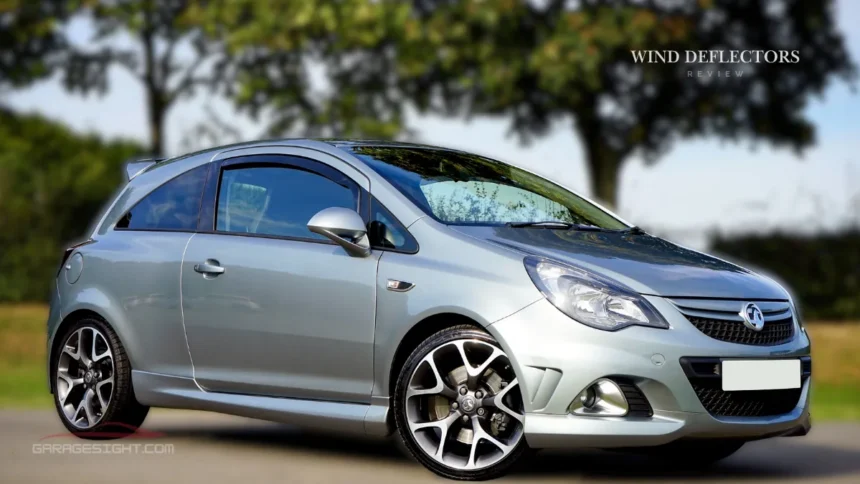
If you’ve ever cracked a window in the rain or fought condensation on a motorway, car wind deflectors solve both problems quietly.
This guide walks through materials, mounting styles, brands, installation, common issues, and the pros and cons, so you can decide if fitting a set genuinely suits your car and your budget.
How to Spot Genuine Wind Deflectors
Genuine deflectors stay rigid without warping and show no clouding or yellowing after years in the sun, thanks to UV stabilizers and a protective surface layer built into the plastic itself.
Cheap unbranded stick on versions often turn chalky white within a season, while smooth, rounded edges signal proper mould quality instead of rough, sharp mould lines that hint at poor finishing.
In Channel and Tape On Explained
These systems slide into the upper window run channel, using outward tension against the rubber seal so no glue is needed, a style favored by German brands like ClimAir for a cleaner look.
Tape on car window wind deflectors instead bond to the painted door frame with strong acrylic foam tape, needing a clean, grease free surface for a lasting hold.
Selecting the Ideal Wind Deflector for Your Car
Universal wind deflectors fit a wide range of models and cost less, but rarely match factory lines as closely as a model specific set built for your exact car.
If you want a flush, factory look with minimal risk of triggering anti pinch sensors, a dealership sourced or model specific option is usually worth the extra cost upfront.
Everyday Benefits of Automotive Wind Deflectors
They let you crack a window during rain without soaking the seats, clear condensation faster, and give dogs steady airflow without turbulence on warm drives through the countryside or city traffic.
On highways, that loud noise turns into a soft buzz, which drivers name the most major relief boost by a tiny, low-cost tweak.
A Pillar Blind Spots
The one drawback worth noting is that wind deflectors slightly widen the A pillar profile, which can momentarily hide cyclists or pedestrians at junctions and roundabouts, especially in low light or with tinted glass fitted.
It is a small risk, but one worth double checking your mirrors for until you fully adjust to the new sightline.
Comparing Popular Brands
Budget names like Heko sit around thirty to fifty pounds with a lifetime crack warranty, while ClimAir and WeatherTech move into premium territory with sharper optical clarity and tougher polycarbonate builds that last for years.
OEM branded sets cost the most but offer perfect factory fitment, color matching, and noticeably quieter deflector wind noise once fitted on the move.

Installation and Maintenance Tips
Wind deflectors last longer when the surface is properly cleaned with isopropyl alcohol before fitting, letting the adhesive bond fully instead of lifting at speed on the motorway.
Check retention clips periodically for play, avoid automated car washes with harsh spinning brushes, and reseat any piece immediately if you notice rattling, flapping, or scraping noises.
Common Issues and Quick Fixes
Most problems come down to sensor calibration or loose fitting rather than a faulty part itself, so a little patience usually solves things without needing a replacement.
A window that rolls back down after fitting often just needs a manual reset cycle, while rattling almost always traces back to worn tape or a slightly loose retention clip needing attention.
Is Fitting Them Worth It?
They make sense if you live somewhere rainy, drive with dogs, or simply want cabin airflow without the constant motorway roar wearing you down on long drives.
They are less useful if you always keep windows shut and rely purely on air conditioning, or if you are especially cautious about the small blind spot increase near the A pillar.
Conclusion
Simply put, wind deflectors provide a tiny, cheap path to raise relief, breeze, and storm defense with no huge trade-offs for all normal drivers.
FAQs
What is the point of wind deflector?
They let you crack a window in the rain without soaking the seats, clear condensation faster, and turn motorway noise into a soft buzz.
Is wind deflector any good?
Yes, they’re genuinely useful if you live somewhere rainy or drive with dogs, giving steady airflow without turbulence.
How to apply wind deflector?
Clean the surface with isopropyl alcohol first, then fit using either the tape-on or in-channel method so the adhesive bonds fully.
Is wind deflector legal?
They’re generally legal, though the slightly wider A-pillar profile means checking your mirrors carefully at junctions.